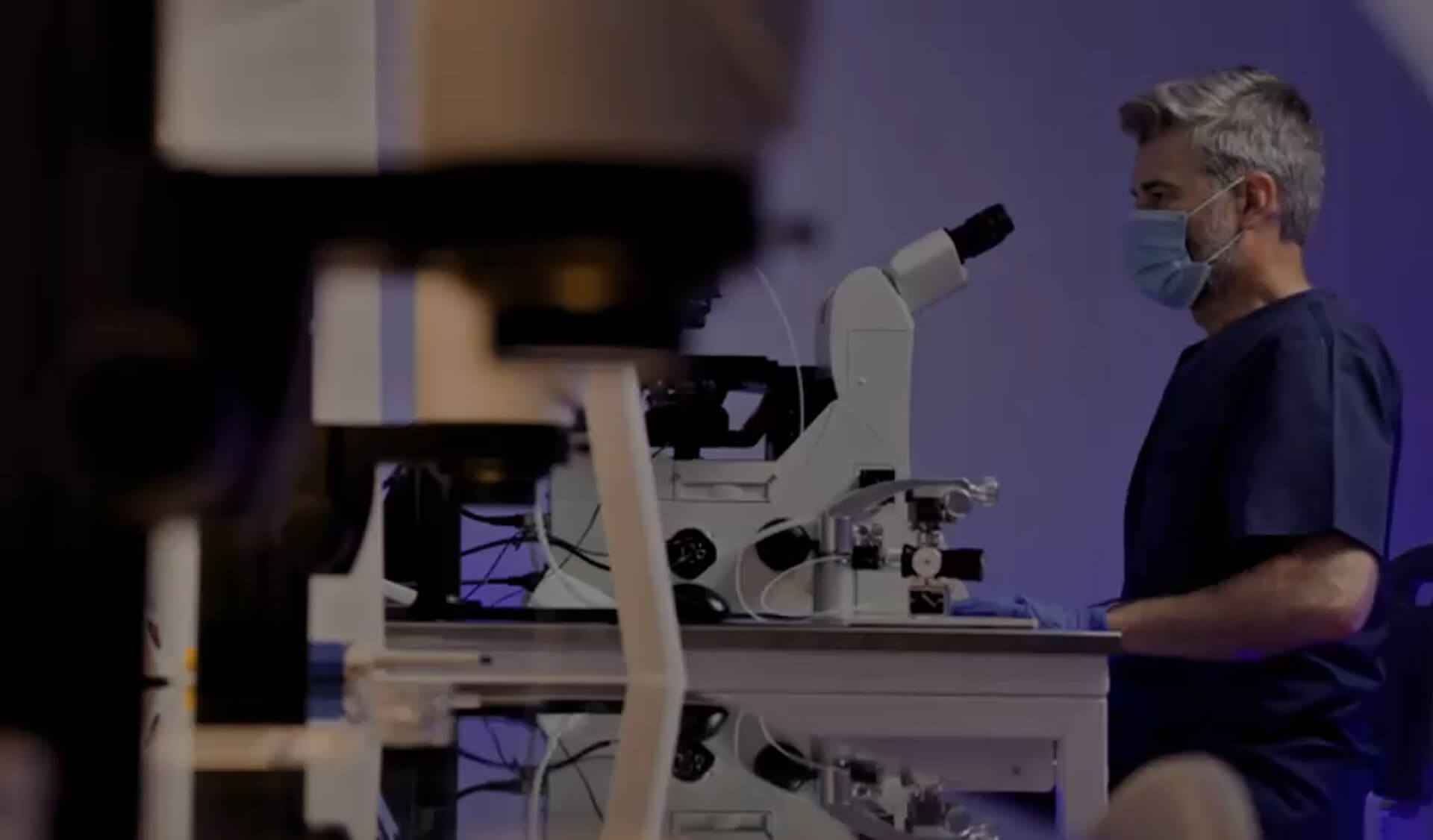
Complex biology.
Massive data.
Trials that can’t wait.
From molecule
to market
Complex biology.
Massive data.
Trials that can’t wait.
From molecule
to market
- + DRUG DISCOVERY
- + GENOMICS
- + CLINICAL TRIALS
Identify drug candidates with confidence
Identifying viable drug candidates is a low-probability process. Sequential, manual experimentation slows discovery, and every failure adds cost and delay. With agentic AI, research teams can:
- Predict compound viability at scale, including absorption, distribution, metabolism, and elimination properties
- Run governed, production-ready agents within existing R&D workflows — without rebuilding around new tooling
- Move from trial-and-error experimentation to systematic, data-driven candidate prioritization
Faster pattern detection at scale
Genomic, proteomic, and multimodal datasets have outgrown legacy analysis tools. Fragmented environments and limited scalability make it hard to find meaningful signals or reproduce findings. With agentic AI, research teams can.
- Detect biomarker signals and identify targets across large-scale genomic and multimodal datasets
- Produce findings that hold up under peer review and regulatory submission
Anticipate trial risks earlier
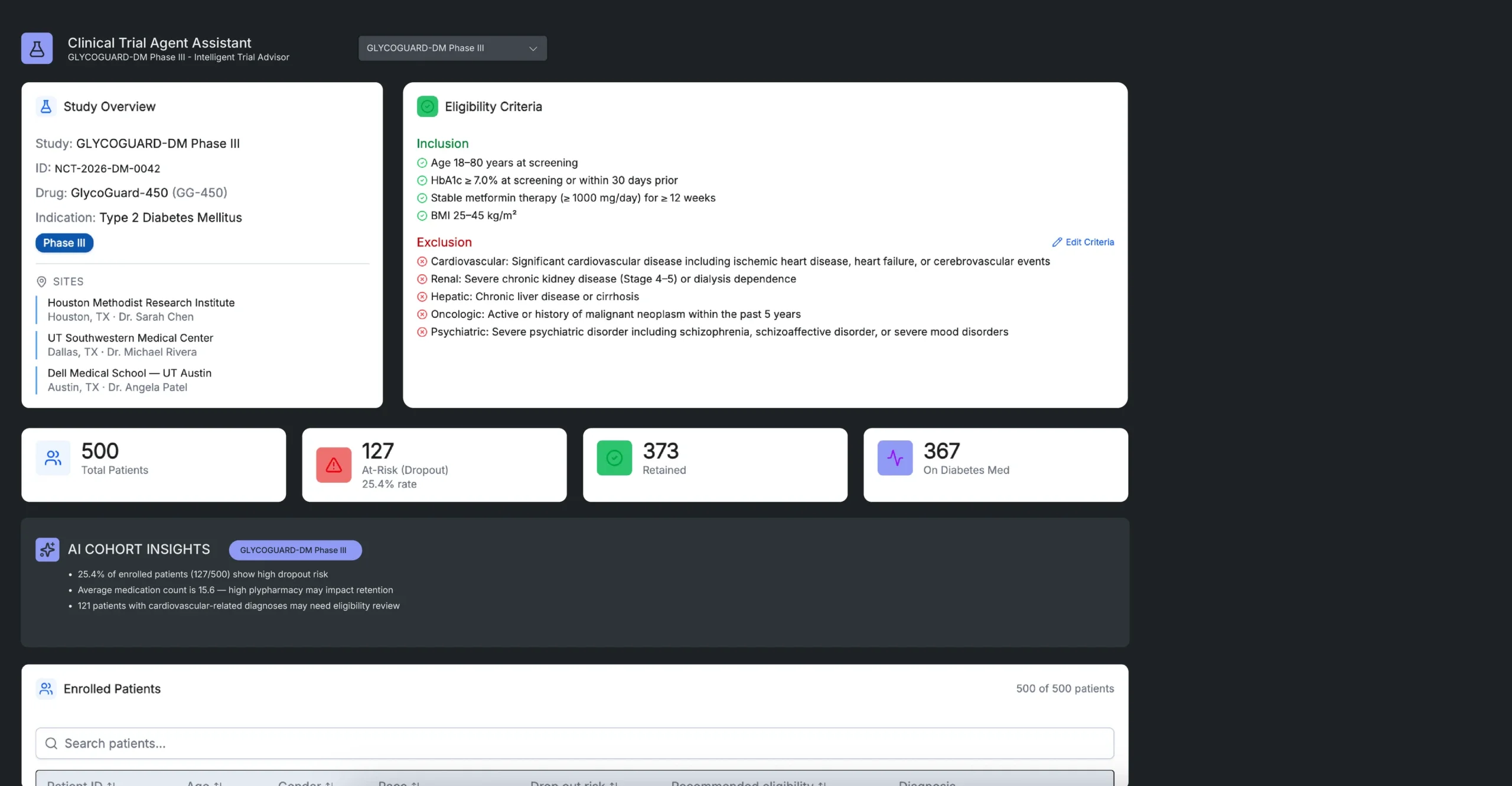
Clinical trial failure signals show up in the data long before they become expensive problems. Poor patient selection, risks that emerge too late, and trials not designed for real-world variability result in high failure rates and costly corrections at the final stages. With agentic AI, clinical teams can:
- Stratify patient populations and improve cohort precision from the earliest stages of trial design
- Monitor risk signals in real time and surface emerging patterns before they escalate
- Support regulatory submission with full traceability across the trial lifecycle, with built-in support for GxP, 21 CFR Part 11, and HIPAA compliance
Why life sciences organizations choose DataRobot
-
R&D puts AI to the test. Production is where most of it fails.
Most AI enters life sciences through an R&D pilot and stalls there. DataRobot is built for what comes next: deploying inside production scientific workflows, from compound screening and biomarker analysis to downstream enterprise operations. Research teams don’t adapt to the platform. The platform adapts to how they work, and holds up under the scrutiny of regulated production environments.
-
If you can’t audit it, you can’t use it.
In life sciences, AI you can’t explain is AI you can’t use. DataRobot is built around that constraint from the start: full traceability from training through deployment, reproducible by design, and aligned to GxP, 21 CFR Part 11, HIPAA, and the regulatory frameworks that govern drug development and clinical practice worldwide. Agentic workflows run and reproduce experiments consistently. Off-the-shelf AI cannot guarantee that. DataRobot can.
-
The only platform with the tools and infrastructure life sciences AI requires.
Hyperscalers and data platforms provide infrastructure. Frontier model providers provide capability. Neither is designed for the molecular, biological, and clinical complexity of life sciences AI. DataRobot, co-engineered with NVIDIA, is. Research teams can model molecular behavior, interpret genomic patterns, and assess clinical risk within a governed, production-ready environment built for the science they actually do.
Why life sciences organizations choose DataRobot
R&D puts AI to the test. Production is where most of it fails.
Most AI enters life sciences through an R&D pilot and stalls there. DataRobot is built for what comes next: deploying inside production scientific workflows, from compound screening and biomarker analysis to downstream enterprise operations. Research teams don’t adapt to the platform. The platform adapts to how they work, and holds up under the scrutiny of regulated production environments.
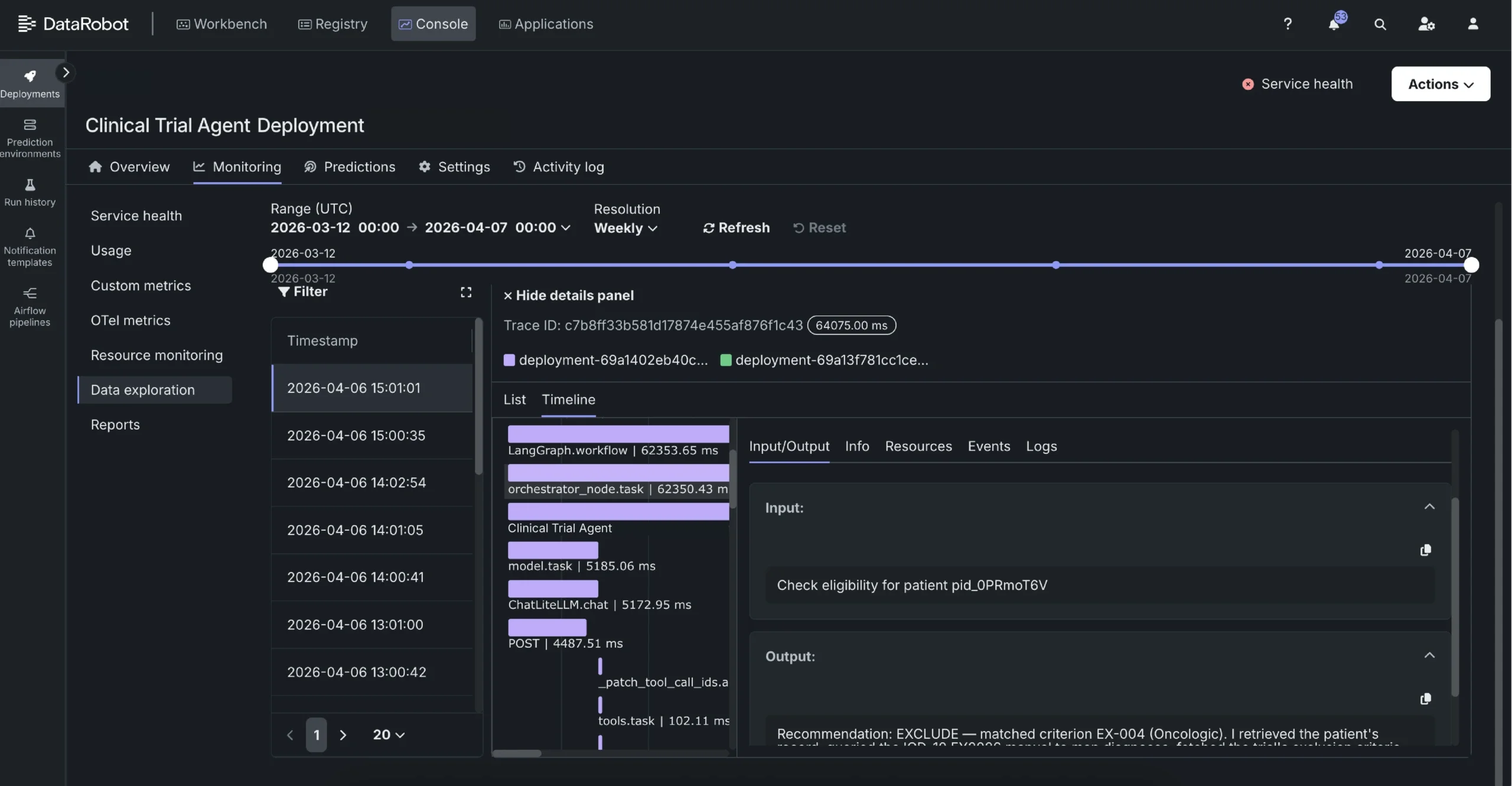
If you can’t audit it, you can’t use it.
In life sciences, AI you can’t explain is AI you can’t use. DataRobot is built around that constraint from the start: full traceability from training through deployment, reproducible by design, and aligned to GxP, 21 CFR Part 11, HIPAA, and the regulatory frameworks that govern drug development and clinical practice worldwide. Agentic workflows run and reproduce experiments consistently. Off-the-shelf AI cannot guarantee that. DataRobot can.
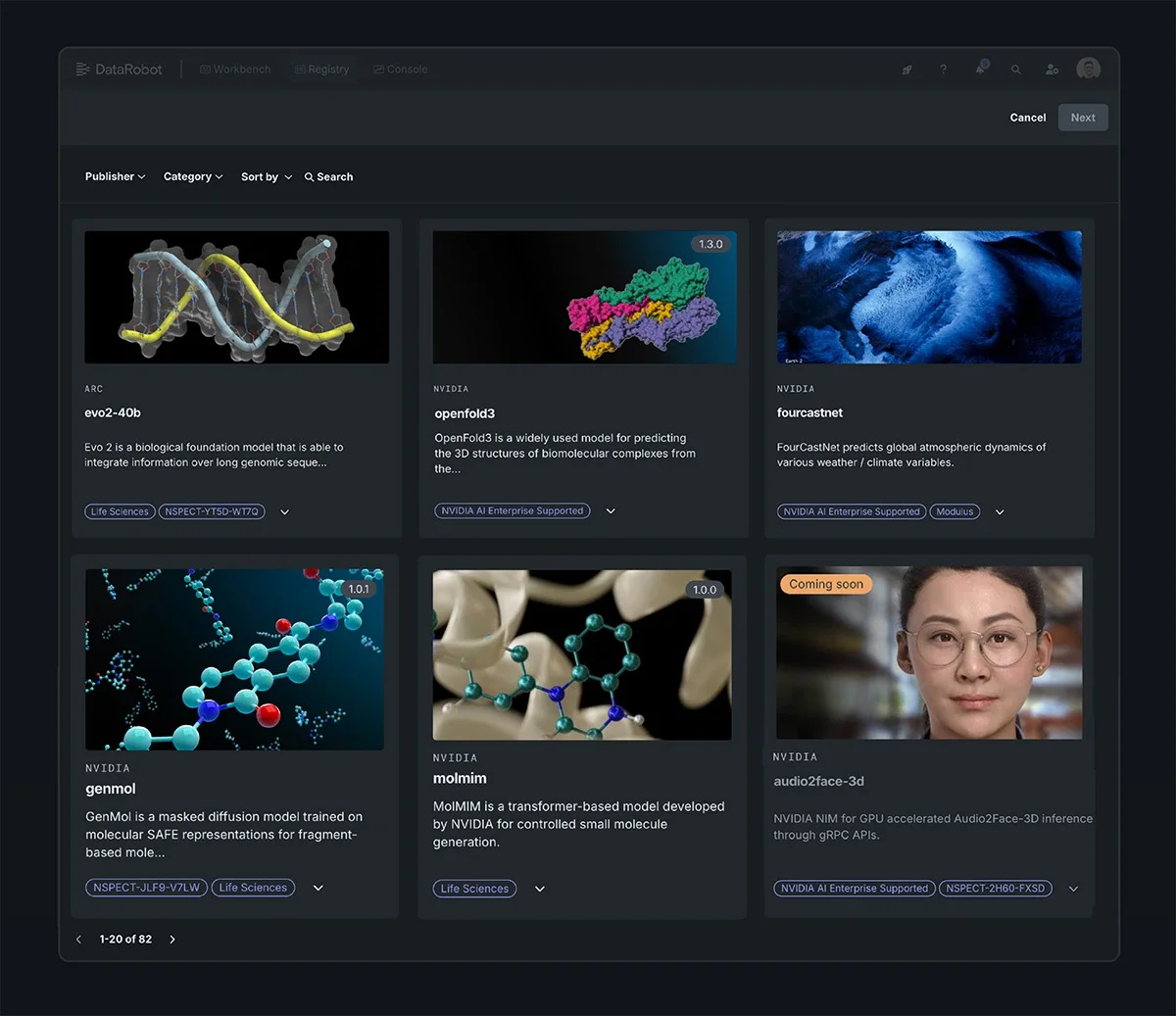
The only platform with the tools and infrastructure life sciences AI requires.
Hyperscalers and data platforms provide infrastructure. Frontier model providers provide capability. Neither is designed for the molecular, biological, and clinical complexity of life sciences AI. DataRobot, co-engineered with NVIDIA, is. Research teams can model molecular behavior, interpret genomic patterns, and assess clinical risk within a governed, production-ready environment built for the science they actually do.
Proven in
pharmaceutical research
and clinical practice

Leader in Gartner Magic Quadrant for Data Science and Machine Learning Platforms
Faster identification of promising drug candidates through AI-driven compound screening
Faster clinical research insights at
UMC Mannheim with DataRobot-powered agentic workflows
Reduction in manual hand-offs across research and data science teams
Built to meet the compliance, auditability, and validation requirements that regulated Life Sciences environments demand — from R&D through production.
- Standards
- HIPAA
- GDPR
- 21 CFR Part 11
- GxP
- Frameworks
- FDA
- EMA
- MHRA
- PMDA
- Alignment
- FDA
- EMA
- MHRA
- PMDA
- Certifications
- SOC 2 Type II
- ISO 27001